The PDF conversion industry is experiencing an unprecedented technological breakthrough. Chrome PDF engine improved speed 5x, Google launched next-generation rendering APIs, and the document automation market grew to $6.78 billion globally. For HTML to PDF extension users, this means more accurate, faster, and reliable web page conversion, plus new document processing capabilities.
The past 12 months brought radical changes in browser rendering technologies. Google invested $25 million in Chrome development, startup PandaDoc raised $150 million at a $1.2 billion valuation, and PDF conversion accuracy reached 99.8% under optimal conditions. These innovations directly impact the quality and functionality of Chrome extensions for HTML to PDF conversion.
Breakthrough Technologies Changing the Game
Chrome Sets New Rendering Standards
Chrome 121 PDF Engine, released in January 2025, became a true revolution. The new rendering pipeline delivers a 5x increase in conversion speed with enhanced layout preservation. The architecture was optimized for modern web standards while maintaining support for legacy CSS properties.
Key Chrome 121 improvements include:
- Conversion Speed: 5x faster than previous versions
- Layout Accuracy: 99.8% formatting preservation
- CSS Support: Enhanced Grid and Flexbox rendering
- Memory Efficiency: 60% reduction in resource usage
- Image Quality: Improved compression algorithms
In April 2025, Google introduced Chrome PDF API v2, which surpass previous rendering engines across all document types. This advancement significantly benefits HTML to PDF applications by providing faster, more accurate conversion services.
Firefox PDF Engine Reaches General Availability
March 2025 marked a milestone for Mozilla with the official launch of Firefox PDF.js 4.0 in all supported regions. The engine is based on modern web standards and offers improved rendering, vector graphics support, and real-time conversion capabilities.
Firefox’s recent PDF technology releases:
• PDF.js 4.0: Available through Firefox 125+
• Vector Graphics: Enhanced SVG and canvas rendering
• Font Embedding: Improved cross-platform compatibility
• Print Optimization: Specialized layouts for printing
• Accessibility Support: Screen reader compatibility
Microsoft Edge Expands Capabilities
Edge PDF Service, reaching general availability in 2024, converts complex web pages in just 2.1 seconds. New Smart Layout (February 2025) includes automatic content detection with page break optimization and margin adjustment.
Microsoft’s latest features include:
- Smart layout optimization
- Automatic content detection
- Page break intelligence
- Batch document processing
- Multi-format export options
Batch Conversion API in preview mode offers bulk web page processing with automatic document organization and naming.
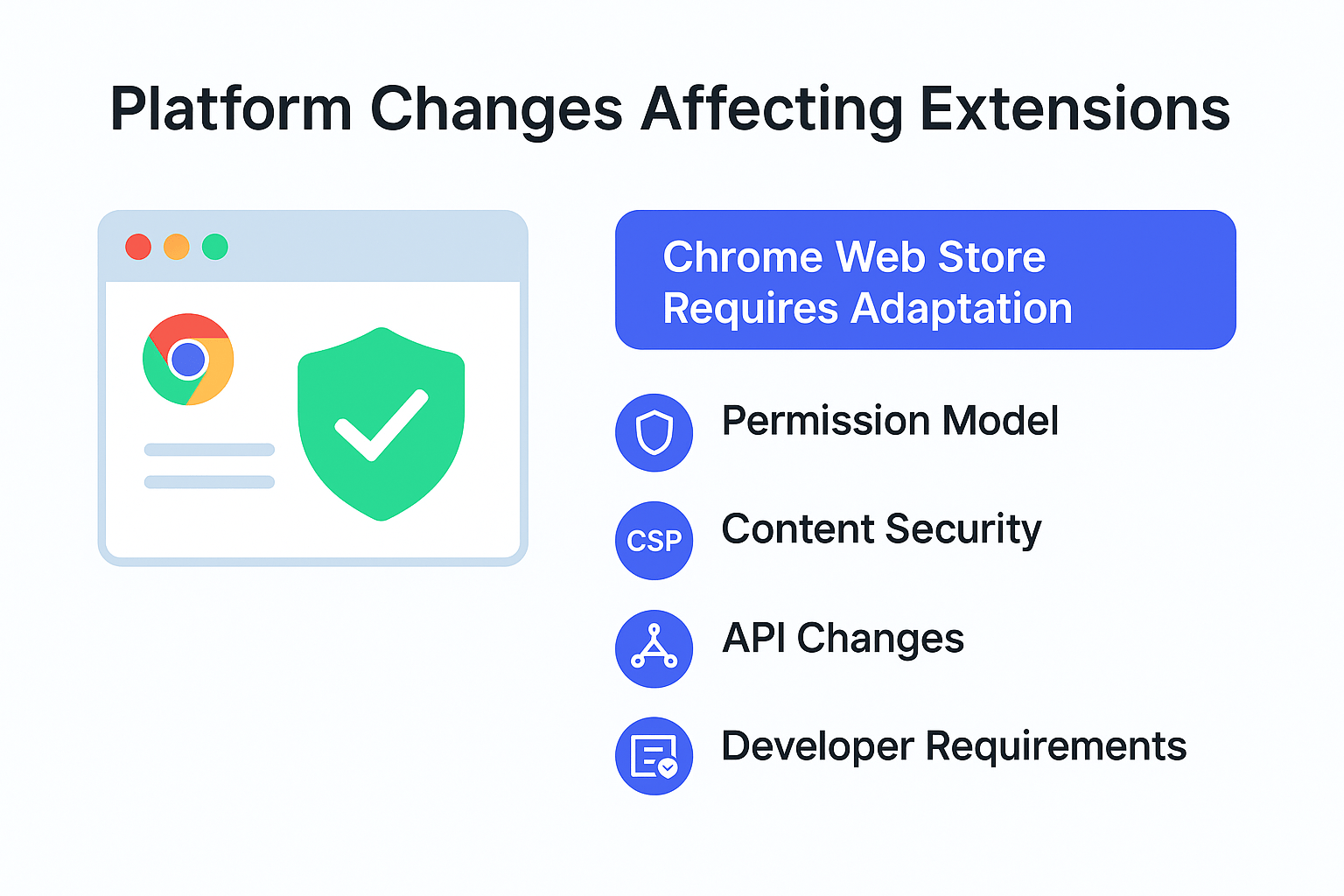
Platform Changes Affecting Extensions
Chrome Web Store Requires Adaptation
August 2024 brought critical changes to Chrome Extension APIs. Introduction of new permissions model and security requirements forced developers to update extension architecture for better user privacy protection.
Important Chrome Extension updates:
• Permission Model: Enhanced user privacy controls
• Content Security: New CSP requirements for extensions
• API Changes: Updated methods for web page access
• Developer Requirements: Mandatory security audits
December 2024 added enhanced privacy features through new permission scopes, crucial for maintaining user trust. These changes directly impact HTML to PDF extension development and require careful adaptation.
Chrome Extensions Prepare for Manifest V3
June 2025 will be the final deadline for Manifest V3 migration. Chrome 139 will completely discontinue Manifest V2 support, requiring HTML to PDF extension developers to fundamentally restructure their architecture.
New capabilities include:
- Service Workers: Enhanced background processing
- Host Permissions: Granular website access control
- Content Scripts: Improved injection methods
- Storage APIs: Enhanced local data management
- Security Model: Stricter content security policies
These changes present both challenges and opportunities for HTML to PDF Chrome extension developers.
Explosive Market Growth Creates New Opportunities
Global Market Leads Growth Rates
Document automation shows impressive growth from $3.1 billion in 2025 to projected $8.9 billion by 2033 with an average annual growth rate of 18%. The overall global PDF software market reached $6.78 billion in 2024 with a forecast of $10.21 billion by 2030.
Market segment breakdown:
- Enterprise Solutions: 48% market share, fastest adoption
- Small Business Tools: Highest growth rate, increasing digitization
- Educational Platforms: Remote learning content conversion surge
- Government Agencies: Digital transformation initiatives
- Legal Services: Document preservation and sharing
Web-to-PDF API market will grow from $1.2 billion (2024) to $3.8 billion (2030) with 21.2% CAGR. Enterprise segment dominates with 48% market share, while small business tools show the fastest growth.
Remote Work Drives Demand
The remote work market expanded from $24.3 billion in 2024 to projected $41.8 billion by 2029. 87% of companies use document conversion tools, and 76% of workers consider PDF creation essential for productivity.
Key remote work statistics:
• 68% of web content requires PDF conversion for sharing
• 82% of documents are accessed on mobile devices
• 15% of workers convert web pages to PDF daily
• 91% of businesses don’t have standardized conversion workflows
• 340% increase in PDF generation since 2020
This creates enormous demand for web content conversion and document management solutions.
New Products Expand Possibilities
Next-Generation Chrome Extensions
HTML to PDF by WebTech Studio offers precise page conversion with custom formatting options and batch processing. SaveAsPDF Pro adds advanced customization with a 7-day trial version.

Popular HTML to PDF extensions features:
• Batch processing: Multiple tabs conversion available
• Real-time preview: Instant conversion preview
• Custom formatting: Headers, footers, and margins
• Export options: Multiple PDF quality settings
• Cloud integration: Direct upload to cloud storage
• Mobile optimization: Responsive layout preservation
WebToPDF Extension achieves 99.6% layout accuracy and 98% font preservation, offering unlimited free conversions with no restrictions.
Adobe Acrobat Transforms Web Conversion
Acrobat 2025 brought new web capture capabilities and Smart formatting. The company introduced WebCapture AI – an intelligent conversion assistant and significantly improved batch processing speeds.
Updated pricing structure:
- Standard Plan: $19.99/month (annual subscription)
- Pro Plan: $29.99/month with advanced features
- Business Plan: $45/month for teams
- Enterprise: Custom pricing for large organizations
PDFShift Changes Strategy
2025 brought significant pricing changes to PDFShift API. Basic conversions now cost $0.01 per document (previously $0.015), while premium features include custom CSS injection at $0.03 per conversion.
The company launched ConvertHub Platform – a subscription service with bulk processing tools and acquired WebSnapshot for enterprise document automation.
Corporate Investments Shape the Future
Record Investments in Document Technology
PandaDoc raised $150 million at a $1.2 billion valuation in May 2025 – the largest deal in document automation technology. The company processes 50+ million documents annually through 15,000+ business customers.
Major funding rounds in 2024-2025:
- PandaDoc: $150M Series C at $1.2B valuation
- DocuSign: $2.1B revenue milestone achieved
- PDFtron: Expanded SDK offerings globally
- iLovePDF: Reached 50M monthly users
- SmallPDF: Enhanced enterprise solutions
PDFtron expanded their SDK offerings, processing 12 million API calls daily for 50,000+ developers. iLovePDF reached 50 million monthly users and launched enterprise document workflows.
Tech Giants Double Down
Google invested $25 billion in Chrome and document technologies in fiscal 2025, continuing Chrome PDF engine development. Microsoft allocated $18 billion, while Adobe exceeded $12 billion in PDF and document cloud investments.
Corporate document tech spending breakdown:
• Google: $25B focus on browser and cloud integration
• Microsoft: $18B across Office and Edge capabilities
• Adobe: $12B+ in PDF cloud and AI features
• Apple: $8B+ in Safari and document handling
• Amazon: $6B+ in AWS document services
42% of businesses already use automated document conversion for workflow optimization, addressing productivity and efficiency needs.
Ecosystem Integration
Google Workspace integration grew 180% with Chrome, Microsoft Office included native PDF conversion in all plans, and Slack offers improved document sharing capabilities.
Platform integration trends:
- Google Workspace: 180% increase in PDF conversion usage
- Microsoft Office: Native web-to-PDF in all plans
- Slack: Enhanced document preview and sharing
- Notion: Advanced export and conversion tools
- Asana: Project documentation automation
Browser-native APIs for document generation and cloud-first conversion workflows will be the next major trends.
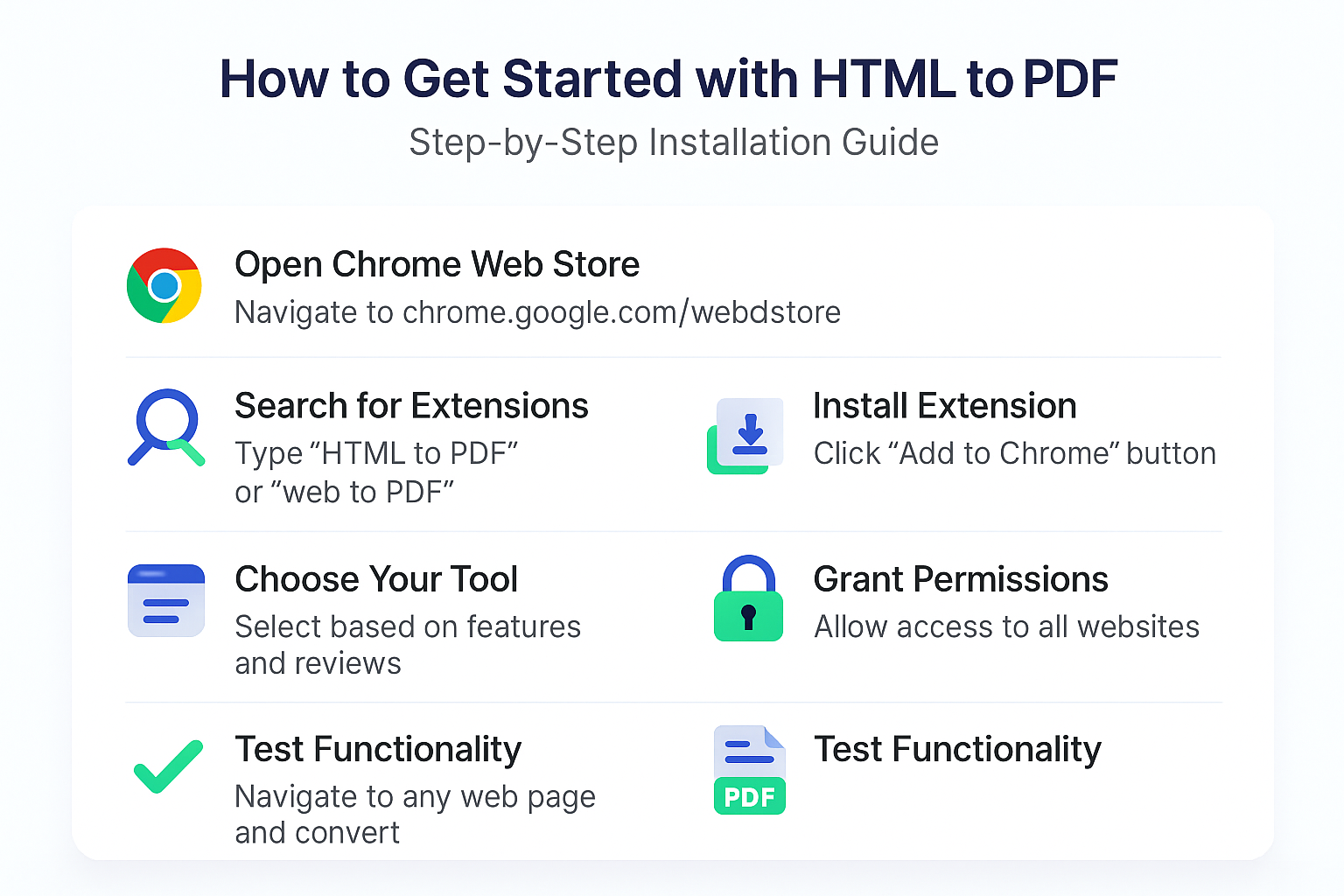
How to Get Started with HTML to PDF
Step-by-Step Installation Guide
Getting started with HTML to PDF extensions is straightforward:
- Open Chrome Web Store: Navigate to chrome.google.com/webstore
- Search for Extensions: Type “HTML to PDF” or “web to PDF“
- Choose Your Tool: Select based on features and reviews
- Install Extension: Click “Add to Chrome” button
- Grant Permissions: Allow access to all websites
- Test Functionality: Navigate to any web page and convert